Delivering Digital Twins
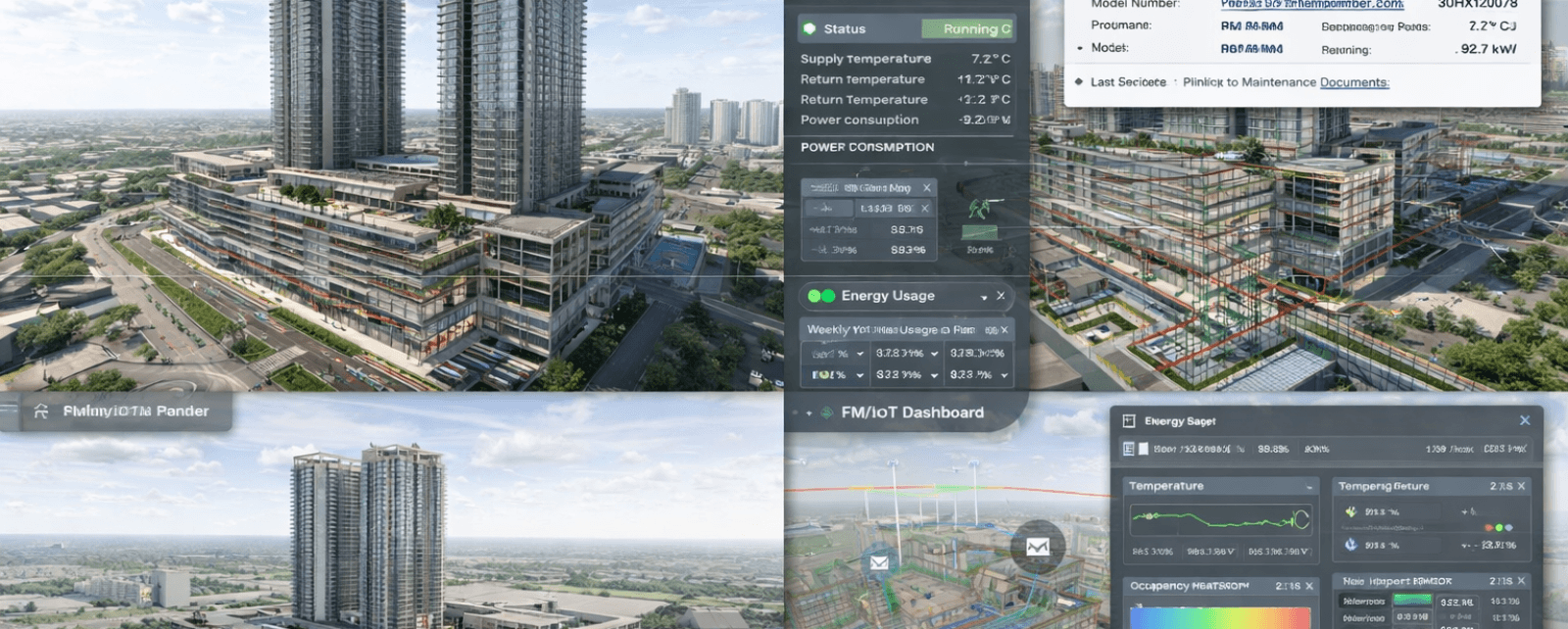
At BIM Syncro, we ensure that the projects we deliver become true digital twin rather than just static 3D BIM models. Our approach is holistic – from early design through construction and into operations, we continually enrich and verify the model so that it evolves into a living, data-driven replica of the physical building. This corporate article walks through how we differentiate a real digital twin from a basic BIM model, and the key deliverables at each project stage (LOD 100 to 500) that make our models “IoT-ready” and valuable for facility management. We explain how asset data is carefully structured (using standards like COBie and IFC), how we leverage reality capture for as-built verification, and how sensor integrations provide operational insights. By the end, it will be clear how our digital twin approach enables predictive maintenance, asset tracking, system monitoring, and regulatory compliance – with the model continuously updated to remain accurate and intelligent over the facility’s lifecycle.
True Digital Twin vs. Basic BIM Model
We often explain to clients that a BIM model shows what the building is, while a digital twin shows how the building is performing in real time. A conventional 3D BIM model is typically used for design and construction; it’s essentially a detailed geometric representation with embedded data, but it’s static once construction ends. In contrast, a true digital twin is a living model – it’s the BIM model taken to the next level, continuously fed with live data from the actual building. We link the BIM to operational systems (IoT sensors, Building Management Systems, etc.), so the twin mirrors the building’s behavior and condition moment by moment. This means the digital twin isn’t just a visual 3D asset; it becomes part of the building’s tech stack for maintenance and operations, answering questions about performance that a static BIM cannot.
Key Distinction: A basic BIM model delivers an as-built snapshot, whereas our digital twin continues to evolve after handover. By integrating real-time sensor inputs (temperature, energy usage, occupancy, equipment status), the twin provides a comprehensive, up-to-date picture of the facility’s state. For example, our digital twin can highlight when an HVAC unit is straining or predict when a pump might fail based on trends – capabilities a standalone BIM model simply doesn’t have. In short, BIM is the foundation, but the true digital twin is BIM plus continuous data and analytics, enabling “lifecycle intelligence” that drives proactive decision-making.
Project Deliverables by Project Phase
LOD 100 – Concept & Strategy:
-
Massing models and geo-coordinated spatial layout
-
Preliminary asset tagging strategy and coding schema
-
Digital twin readiness roadmap
-
Tools Used: Autodesk Revit for concept modeling, InfraWorks for site context
-
Team Expertise: Our planners and conceptual modelers define long-term digital strategies from day one
LOD 200–300 – Design Development & Coordination:
-
Fully coordinated architectural, structural, and MEP models
-
Federated model for clash detection and design validation
-
Structured asset metadata aligned to COBie/IFC
-
Space zoning and room data sheets
-
Tools Used: Revit, Navisworks for coordination, Civil 3D for infrastructure modeling
-
Team Expertise: Our multidisciplinary engineers and BIM coordinators ensure spatial accuracy and metadata integrity
LOD 350–400 – Construction & Fabrication:
-
As-built model updates based on reality capture (e.g., LiDAR scans)
-
Asset registry with real product specs, install dates, and warranties
-
Integration-ready data sheets for commissioning
-
Tools Used: ReCap Pro for scan-to-BIM, Synchro for 4D simulation, MS Project for construction phasing
-
Team Expertise: Our field BIM managers, M&E specialists, and QC engineers update and verify every installation for fidelity
LOD 500 – Handover & Digital Twin Deployment:
-
Final verified as-built BIM model (LOD 500)
-
COBie spreadsheet for FM system ingestion
-
IFC export for long-term interoperability
-
Interactive twin dashboard with sensor integrations
-
Owner’s Digital Twin Playbook: maintenance, updates, SOPs
-
Tools Used: Navisworks Manage, BIM 360, Robot Structural Analysis for final QA, and customized FM integration platforms
-
Team Expertise: Our digital twin specialists and asset managers handle final delivery, data linking, and post-handover client onboarding
Operational Value of a True Digital Twin
Once deployed, our digital twin enables:
-
Predictive maintenance using sensor thresholds and analytics
-
Asset tracking with full life-cycle documentation
-
Energy and system monitoring via real-time dashboards
-
Regulatory compliance through automated reporting
-
Occupant experience improvements through environmental data insights
Our facilities-focused engineers and data analysts support clients post-handover to interpret data, run diagnostics, and perform annual twin audits. From initial design through FM optimization, our team’s combined expertise in civil, M&E, software integration, and BIM execution ensures continuity and trust in the digital representation.
Unlike pseudo-twins that stall at handover, our digital twins are built to live, breathe, and evolve with the facility. We partner with facility teams to ensure the model remains accurate and integrated throughout operations. That’s how we deliver true digital continuity—from blueprint to building performance.
Let’s move beyond static BIM. Let’s build smarter with digital twins that work as hard as the assets they represent.
Recommended Post
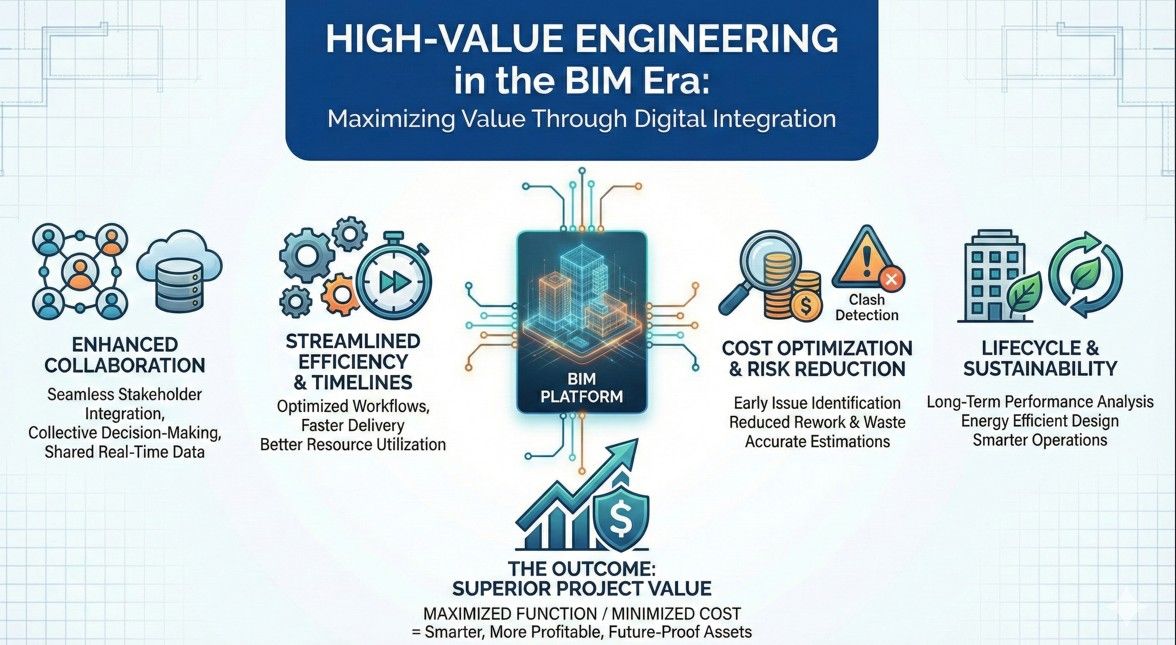
What “High-Value Engineering” Actually Means

Beyond the 3D Model: Pivoting to "Day Two" Operational Intelligence