Industrial Facilities & Utilities Engineering with BIM and Digital Twin Intelligence
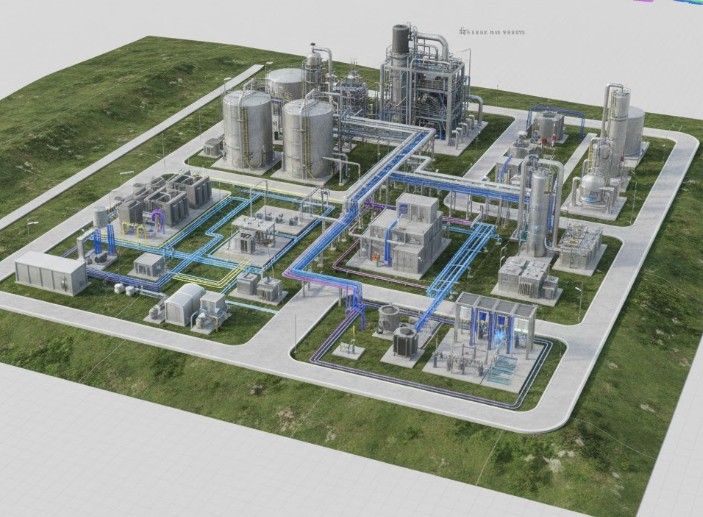
Most industrial and utilities projects fail quietly:
-
Plants start, but underperform
-
Utilities run, but with fragile redundancy
-
Assets exist, but are hard to operate or maintain
This happens because the average approach:
-
Treats civil, M&E, and process systems as separate silos
-
Designs for buildability, not operability
-
Uses BIM for coordination, then discards it
-
Handles compliance as paperwork, not risk control
BIM Syncro was built to solve exactly these problems.
1. Industrial Plant Engineering: Designed for Production, Not Just Completion
What the average firm does
-
Designs to meet minimum functional requirements
-
Optimises CAPEX without understanding OPEX implications
-
Hands over drawings, leaving operators to figure out realities
How BIM Syncro does it better
-
Delivers end-to-end civil, structural, and M&E design aligned to:
-
Process flow
-
Equipment access and maintenance
-
Future expansion and debottlenecking
-
-
Integrates:
-
Heavy foundations and vibration control
-
Utility corridors and serviceability
-
Safety zoning and human movement
-
Result
Plants that don’t just start—but run predictably under load.
2. Utilities Infrastructure Solutions: Resilience Beats Elegance
What the average firm does
-
Designs water, sewerage, and power systems to static demand assumptions
-
Minimises upfront cost
-
Treats resilience as optional
How BIM Syncro does it better
-
Designs utilities as systems, not lines on drawings
-
Models:
-
Redundancy and failure scenarios
-
Load growth and stress conditions
-
Integration with renewable energy and backup systems
-
-
Aligns utilities with:
-
Industrial operations
-
Regulatory thresholds
-
Long-term maintenance realities
-
Result
Infrastructure that survives stress, not just audits.
3. BIM & Digital Twin for Industrial Assets: From Model to Operational Intelligence
What the average firm does
-
Produces 3D models for coordination
-
Runs clash detection once
-
Hands over static as-builts
How BIM Syncro does it better
-
Builds data-rich BIM models that evolve into digital twins
-
Embeds:
-
Asset tagging
-
Maintenance logic
-
Lifecycle data
-
-
Enables:
-
Predictive maintenance
-
Scenario testing
-
Informed shutdown planning
-
Result
BIM stops being a project artifact and becomes an operational decision system.
4. Regulatory & Independent Engineering Services: Compliance as Risk Management
What the average firm does
-
Treats compliance as documentation
-
Responds to authority comments reactively
-
Views third-party checks as obstacles
How BIM Syncro does it better
-
Aligns design, BIM outputs, and safety validation before submission
-
Provides independent engineering checks to:
-
Validate assumptions
-
De-risk mission-critical systems
-
Protect clients from latent design errors
-
Result
Fewer delays, fewer redesigns, fewer uncomfortable boardroom conversations.
The Hidden Advantage: Industrial Experience That Understands Consequences
Industrial and utilities failures don’t look dramatic at first.
They show up as:
-
Repeated shutdowns
-
Maintenance backlogs
-
Safety near-misses
-
Escalating OPEX
BIM Syncro’s methodology is shaped by understanding what breaks, when it breaks, and why it breaks.
That knowledge cannot be reverse-engineered from software manuals.
Conclusion
Average firms design facilities that can be built.
BIM Syncro designs facilities that can be operated, maintained, expanded, and trusted.
In industrial plants and utilities, the real test begins after handover.
BIM Syncro builds for that moment—when drawings stop mattering and performance becomes non-negotiable.
Recommended Post
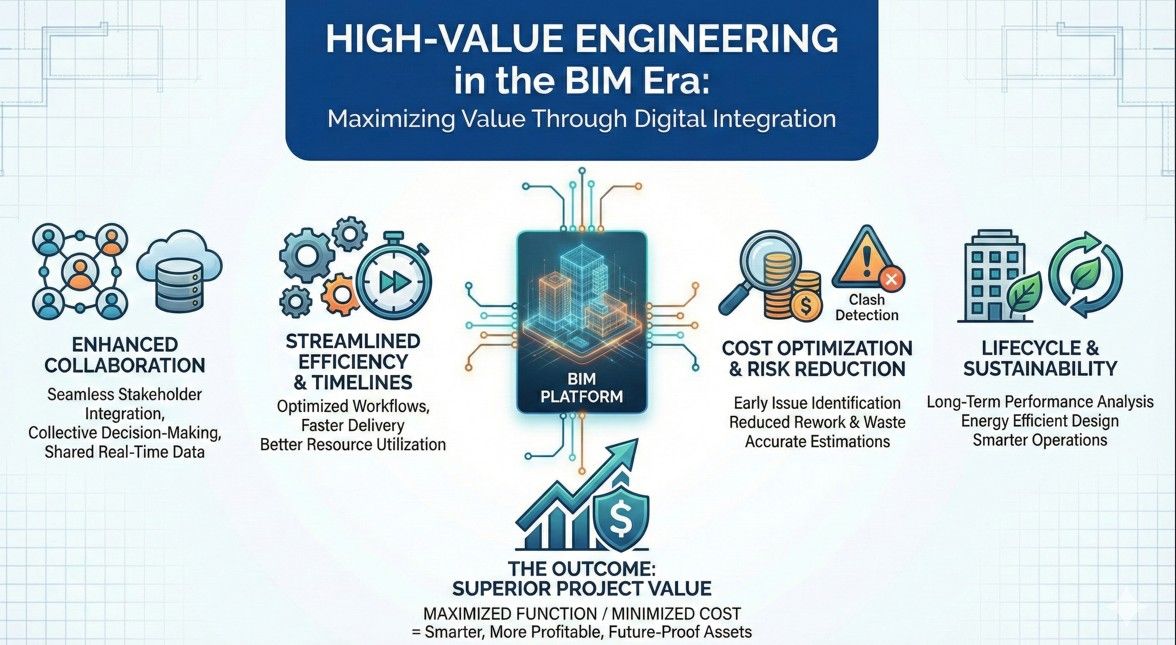
What “High-Value Engineering” Actually Means

Beyond the 3D Model: Pivoting to "Day Two" Operational Intelligence